Unleashing Whimsy: A Guide to Cute Funny Cartoon Safari Animal Clipart
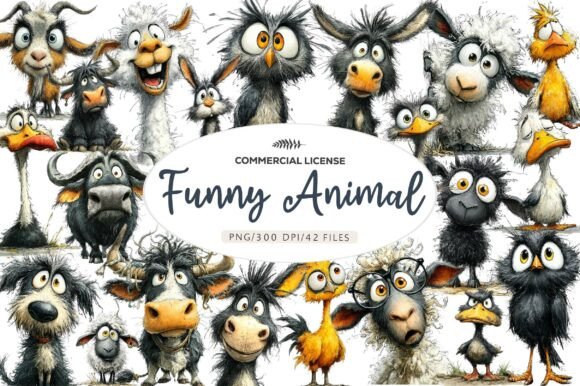
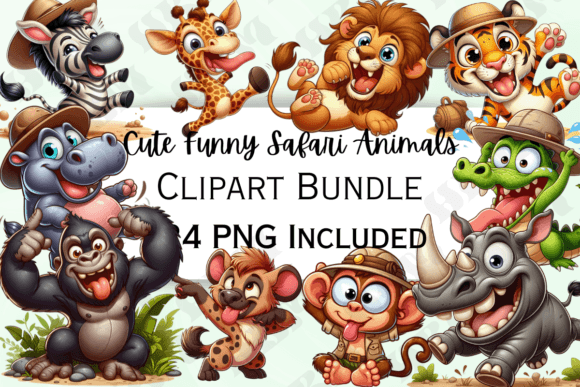
In the landscape of modern design, capturing attention often requires more than just clean lines and professional typography. It demands personality. As a creative professional, I’ve seen trends shift from rigid corporate aesthetics to warmer, more human-centric visuals. Enter the Cute Funny Cartoon Safari Animal Clipart. This isn't just a collection of random animal doodles; it is a carefully curated design asset meant to inject immediate joy and relatability into your projects. We are talking about lions with oversized manes that look like they’ve been styling their hair all morning, giraffes with impossibly long necks craning to get into your business, and zebras striking poses that belong in a comedy sketch.
The visual style here leans heavily into "whimsical realism" but with a cartoonish twist. The line work is clean and bold, making these assets scalable for various applications without losing integrity. The color palettes are vibrant yet balanced, avoiding the garish neon look of cheap clipart. Instead, you get rich, saturated tones that feel premium. This specific style of illustration bridges the gap between professional graphic design and playful storytelling. It is the kind of design asset that stops a user from scrolling, not because it is loud, but because it is charming. For the designer or entrepreneur, this collection offers a distinct voice—friendly, approachable, and undeniably fun.
Strategic Applications: From Brand Identity to Editorial Design
Understanding where to deploy the Cute Funny Cartoon Safari Animal Clipart is just as important as the art itself. While many might assume this is strictly for children’s books, the reality is far broader. In brand identity, character-driven branding is exploding. A small business targeting parents, pet owners, or even eco-conscious brands can use a stylized safari animal as a mascot or recurring visual motif. It creates a brand identity that feels less like a corporation and more like a friend. Imagine a sustainable packaging company using a smiling hippo on their mailer boxes—it instantly disarms the customer and makes the unboxing experience memorable.
In the realm of editorial design and packaging design, these assets are goldmines. If you are a publisher working on a lifestyle magazine or a blog post about "life hacks," using a cartoon lion looking confused or a monkey covering its eyes can visually represent emotions better than stock photography. For packaging design, particularly in the food and beverage or cosmetics industries, a funny zebra can add shelf appeal that competitors using standard serif fonts and minimalist layouts cannot match. Furthermore, social media graphics thrive on engagement. These illustrations are perfect for Instagram carousels, stickers, or highlight covers, providing a cohesive, playful aesthetic that boosts recognition.
Integrating Playfulness with Professionalism
A common hesitation among seasoned designers is how to mix funny safari animals with professional layouts. The secret lies in balance and typography. You wouldn't pair these playful illustrations with a stiff, traditional serif font unless you are going for a specific contrast. Instead, consider a clean sans serif font for your body text to ensure readability, allowing the clipart to serve as the focal point. Alternatively, a handwritten font or script font can amplify the casual, friendly vibe if used for headers.
When evaluating font pairing, treat the clipart as a display element. They act like a display font—heavy on personality but low on data density. They shouldn't clutter the page; they should guide the eye. For instance, in web design, you might use a cartoon giraffe to point toward a "Sign Up" button. This utilizes the animal's line of sight to create a visual hierarchy, guiding the user naturally. This approach respects the principles of modern typography and layout while leveraging the emotional pull of the illustrations.
Practical Selection and Implementation Guide
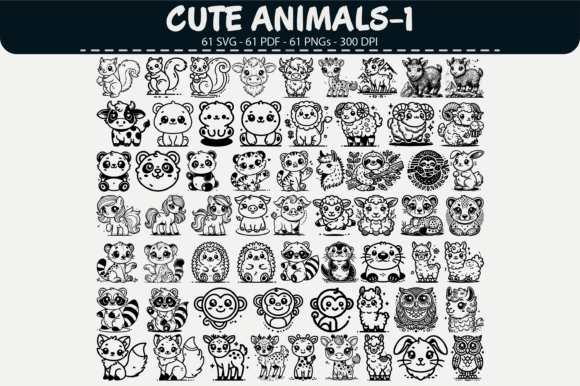
Before you download and integrate, take a moment to evaluate the fit. First, check the file formats. A professional premium font or clipart package should come with high-resolution PNGs (with transparent backgrounds) and ideally vector files (SVG or EPS). Vectors are crucial for logo design and large-format printing, ensuring your funny zebra doesn't become a pixelated mess on a trade show banner.
Second, consider the "vibe consistency." Does the art style match your existing typeface? If your brand uses a very geometric, futuristic sans serif font, the organic, round shapes of cartoon animals might clash. However, if your brand voice is warm and community-focused, these assets will feel like a natural extension of your creative font choices. Always test the clipart against your background colors. High contrast is key; a dark lion needs a light background, or you will need a version with a white outline or drop shadow.
Finally, regarding licensing: since you are likely using this for commercial font and asset projects, verify the license. You need to know if the Cute Funny Cartoon Safari Animal Clipart is cleared for merchandise (Print on Demand) or if it is limited to digital use. Most high-quality collections allow for broad commercial use, but checking the terms protects your business legally. By combining these practical checks with your creative vision, you can turn a simple set of illustrations into a powerful tool for audience engagement and brand storytelling.